Customer Experience Audit in Switzerland: Method, Scope, and Deliverables
A customer experience audit observes what a customer actually experiences, then compares this reality to company standards. Method, multichannel scope, deliverables, ethics, and data protection for a reliable and comparable system in Switzerland.

A customer experience audit consists of observing, measuring, and documenting what a customer actually experiences when interacting with a company, and then comparing this reality to the standards the company has defined. In Switzerland, this approach is used by multi-site brands, franchise networks, service providers, and institutions that want to know what is actually happening at the point of sale, over the phone, or online, and not just what their customers state in a questionnaire. ## What distinguishes an audit from a satisfaction survey A satisfaction survey gathers customer perception: the customer recounts what they felt, based on their memory and priorities. A customer experience audit observes the actual flow of the contact, based on pre-defined criteria, and compares it to the company's promise. The two approaches complement each other. The questionnaire indicates whether the customer is satisfied; the audit explains why and highlights the gap between the planned procedure and daily practice. This difference matters in a multi-site context. A satisfaction average can hide significant gaps between two points of sale, or between two teams at the same site. The audit makes these gaps visible with dated and verifiable facts: was the customer greeted, was the warranty explained, was the current promotion offered, did the promised follow-up take place? ## What an audit concretely evaluates The scope is built based on your standards, not a generic list. The dimensions most often included are the following: - The welcome, whether physical or by phone, and the delay before the first contact. - The discovery of the need and the quality of the advice provided. - Adherence to the script and internal procedures, without excessive rigidity. - The product or service argument and the clarity of explanations. - Handling objections and difficult situations. - The application of prices, conditions, and current promotions. - The presentation of the point of sale, cleanliness, and product availability. - Handling a complaint and follow-up after the contact. Each criterion is formulated in an observable manner, with a rating scale and expected examples. It is this precision that allows two different evaluators to reach a comparable judgment. ## A scope that covers the four channels of the journey An audit limited to the checkout no longer reflects the real experience. The customer journey crosses several channels, and the audit must cover them consistently: - The mystery visit at the point of sale, for on-site welcome and advice. - The mystery call, for contact centers, appointment scheduling, and after-sales service. - The e-visit, for online journeys, information requests, and the ordering funnel. - The audit of the Google Business Profile, for local visibility and information seen before the visit. Coupling these channels in the same campaign allows a conversion problem to be linked to a specific touchpoint, instead of observing a result without knowing the cause. ## How an audit is conducted, step by step First step, the definition of objectives. What decisions will need to be made based on the results? A compliance campaign, preparation for certification, team upskilling, or comparison between sites do not require the same approach. Second step, the construction of the grid. The criteria are drafted with you, based on your internal documents, then validated before launch. This is the moment when the final utility of the report is decided. Third step, recruitment and training of evaluators. Profiles are chosen to correspond to your actual clientele, then briefed on the scenario and the questionnaire. At Swiss Audit Shop, this step relies on the Mystery Shopping Academy, an online training protocol that prepares each mystery shopper before their first mission. Fourth step, field work and quality control. Visits are carried out according to the scenario, then each report is checked: consistency of responses, level of detail, presence of expected factual elements. Fifth step, analysis and presentation. The data is consolidated, compared between sites and between waves, then transformed into findings and action priorities. ## Why the Swiss context changes the method A system conducted across Switzerland cannot rely on a centralized panel. A visit in German-speaking Switzerland evaluated by an investigator who does not speak German does not reflect the experience of a German-speaking customer, and the same applies to French-speaking Switzerland and Ticino. A credible audit therefore mobilizes local evaluators, capable of playing a realistic scenario in their region, in the customer's language. This requirement also concerns customs: expectations regarding welcome, conversation, and service pace vary from one linguistic region to another. ## Expected deliverables A useful audit produces several levels of reading: - A report per point of sale, with compliant and non-compliant criteria. - A dashboard to track results over time. - A network consolidation to compare regions, formats, and periods. - A prioritized action plan, with the most frequent gaps and suggested corrections. - A feedback session for teams, in a form usable by site managers. At Swiss Audit Shop, the results are accessible via the SAS Survey reporting software, with charts, filters, and exports. ## Ethics, consent, and data protection Professional mystery shopping relies on a strict framework. The service provider's membership in the MSPA, the international professional association for the sector, guarantees realistic scenarios, evaluator consent, and data confidentiality. No endangerment, no false administrative identity, no pressure on employees. In Switzerland, the processing of personal data is governed by the Federal Act on Data Protection. A rigorous provider specifies where reports are hosted, who can access them, and for how long. If your evaluations involve recordings or photographs, these points must be resolved contractually before launch. ## Launching a first audit: six points of vigilance 1. Define the decisions you want to inform before choosing the criteria. 2. Verify the actual coverage of the provider, region by region and language by language. 3. Demand an anonymized sample report to judge the precision of the findings. 4. Plan a first reference wave without excessive internal communication. 5. Organize feedback for teams; otherwise, results remain unexploited. 6. Plan the next wave from the start, as it is the only way to measure progress. ## Conclusion A customer experience audit is not a one-off check. It is a measurement tool that, when repeated at regular intervals with the same grid, gives management an objective vision of what their customers experience, site by site and channel by channel, and gives teams clear priorities for improvement. For a Swiss company, the value of such a system depends on three elements: the quality of the grid, the credibility of the evaluators in the field, and the regularity of the measurement over time.
FAQ
Further reading
Mystery survey
The mystery survey evaluates your online services and digital journey through the eyes of a mystery shopper. It measures the quality of the…
Read articleOur sector expertise : Retail
Retail relies on a smooth and engaging in-store experience. Our mystery evaluations measure welcome, advice, presentation and the sales…
Read articleMystery shopping at Swiss Audit Shop
Our approach to mystery shopping and customer experience measurement.
swissauditshop.comWant to evaluate your customer experience?
Let's discuss your goals and build a program tailored to your business.
Request a quoteRelated articles


Pourquoi la formation est essentielle pour offrir une expérience client exceptionnelle
L'expérience client est devenue un enjeu majeur pour les entreprises. Pour offrir une expérience client exceptionnelle, il est essentiel de comprendre les attentes des clients et d'y répondre de manière efficace. Et c'est là que la formation entre en jeu.
Read article
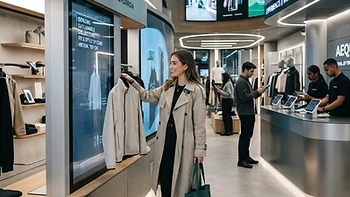
Révolutionnez votre expérience client en utilisant notre solution de mystery shopping sur mesure
La satisfaction client est un élément clé de toute entreprise prospère, et le mystery shopping est un moyen efficace d'obtenir des informations précieuses sur l'expérience client. Découvrez les avantages de notre solution de mystery shopping sur mesure.
Read article