Current trends in mystery shopping in the retail sector
Mystery shopping has experienced significant growth in recent years, particularly in the retail sector. Discover current trends, the most common types of missions, the latest tools and technologies, as well as best practices.
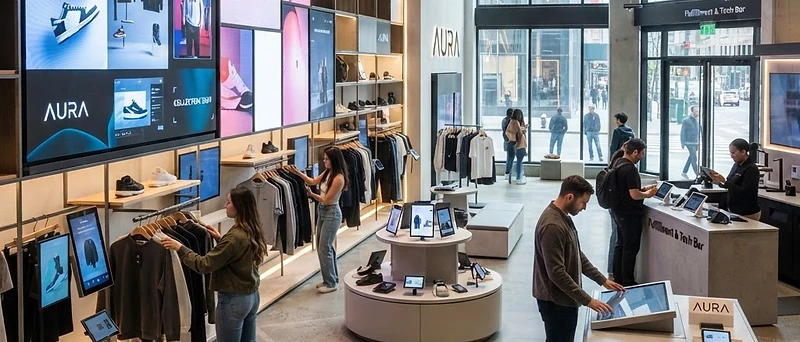
Mystery shopping is a method for evaluating business performance that involves sending incognito evaluators to sales points to assess the quality of services provided. This method has seen significant growth in recent years, particularly in the retail sector. In this article, we will examine the current trends of mystery shopping in the retail sector, as well as best practices and the latest data collection tools and technologies. ## I. The most common types of missions used in the retail sector Mystery shopping can be used to assess a variety of factors related to business performance. Here are some of the most common types of missions used in the retail sector: ### A. Service quality assessment missions Service quality assessment missions are designed to evaluate the quality of customer service provided by store employees. Incognito evaluators can assess factors such as employee courtesy, their ability to answer customer questions, and their aptitude for problem-solving. ### B. Product presentation assessment missions Product presentation assessment missions are designed to evaluate how products are presented in the store. Incognito evaluators can assess factors such as store cleanliness, product organization, ease of navigation within the store, and ease of access to products. ### C. Regulatory compliance assessment missions Regulatory compliance assessment missions are designed to evaluate a company's compliance with local, national, and international regulations. Incognito evaluators can assess factors such as compliance with safety standards, quality standards, and environmental standards. ### D. Competitive assessment missions Competitive assessment missions are designed to evaluate a company's performance relative to its competitors. Incognito evaluators can assess factors such as customer service quality, product presentation, pricing, and the range of products offered by competitors. ## II. The latest data collection tools and technologies Mystery shopping has evolved significantly in recent years, particularly concerning data collection tools and technologies. Here are some of the latest tools and technologies used in mystery shopping: ### A. Mobile applications for evaluators Mobile applications allow evaluators to easily and quickly record their observations and notes during missions. These applications can also include features such as geolocation, which tracks the movements of evaluators to ensure they are in the locations they are meant to evaluate. Mobile applications can also be used to collect photos, videos, and audio recordings during missions. ### B. Real-time data analysis tools Real-time data analysis tools allow data to be collected and analyzed instantly during missions. Companies can use these tools to track results in real-time and make informed decisions based on the outcomes obtained. ### C. Real-time customer satisfaction analysis tools Real-time customer satisfaction analysis tools allow data on customer satisfaction to be collected during missions. These tools can be used to measure customer satisfaction regarding different aspects of the customer experience, such as customer service quality, product quality, and store cleanliness. ## III. Best practices for result analysis and decision-making Analyzing results is a crucial step in the mystery shopping process. Here are some best practices: ### A. Comparative analysis of results from different missions It is important to compare results from different missions to determine trends and recurring issues. Companies can use this data to identify areas for improvement and make decisions based on the results obtained. ### B. Using results to improve employee training Mystery shopping results can be used to improve employee training by identifying areas where they need further instruction. Companies can also use the results to evaluate the effectiveness of training and make adjustments accordingly. ### C. Using results to improve the customer experience Mystery shopping results can also be used to improve the customer experience by identifying areas where customers encounter problems. Companies can use this data to make improvements to their customer service and product presentation. ## IV. Concrete examples of success in applying mystery shopping in the retail sector Mystery shopping has been used successfully in many retail companies. Here are some concrete examples: ### A. Service quality assessment in department stores A department store company used mystery shopping to assess the service quality offered by its employees. The results revealed that employees lacked courtesy and professionalism, which led the company to implement training to improve these skills. ### B. Product presentation assessment in clothing boutiques A clothing boutique company used mystery shopping to assess product presentation in its stores. The results revealed that products were not well organized and the presentation was unappealing to customers. The company then modified the product presentation to make them more attractive and easier for customers to find. ### C. Regulatory compliance assessment in pharmacies A pharmacy chain used mystery shopping to assess regulatory compliance in its stores. The results revealed that some stores were not meeting current safety and quality standards. The company then implemented training programs to raise employee awareness of these standards and improve regulatory compliance across all stores. ## V. Common mistakes to avoid when implementing a mystery shopping strategy For mystery shopping to be effective, it is important to avoid certain common mistakes during its implementation: ### A. Not selecting the right evaluators Select evaluators who are qualified to perform mystery shopping missions. Evaluators must have communication, observation, and data analysis skills for the results to be reliable. ### B. Not clearly defining mission objectives It is important to clearly define the objectives of the mission for the results to be relevant and useful. Objectives must be clearly defined before the mission begins so evaluators know exactly what to look for. ### C. Not providing clear feedback to employees after missions Provide clear feedback to employees after missions so they can understand the results and use them to improve. Feedback must be constructive and improvement-oriented, rather than critical. ## Conclusion Mystery shopping is a powerful tool for improving service quality and the customer experience in the retail sector. Companies wishing to implement a mystery shopping strategy must be aware of current trends, best practices, and the latest data collection tools and technologies. By using this information, companies can ensure their mystery shopping strategies are effective and contribute to improved customer satisfaction and business performance.
FAQ
Further reading
Want to evaluate your customer experience?
Let's discuss your goals and build a program tailored to your business.
Request a quoteRelated articles


Audit Qualité de Service Transports Publics et Aviation : Évaluer l'Expérience Voyageur de Bout en Bout
Les Transports Publics et l'Aviation sont au cœur de l'activité économique et sociale de la Suisse. Évaluez l'expérience voyageur de bout en bout, de l'achat du billet à la sortie de la gare ou de l'aéroport.
Read article
Client Mystère Pharmacie Suisse : Audit de Conformité et d'Excellence Santé
Le secteur de la Santé et de la Pharmacie est unique : la qualité du service y est directement liée au bien-être et à la sécurité du patient. Évaluez l'ensemble du parcours, de la prise de rendez-vous au suivi post-consultation.
Read article