Why B2B companies should use mystery shopping
Mystery Shopping is a very common practice among B2C services. Discover how we can intervene in your B2B company to gain a competitive advantage.

Mystery Shopping is a very common practice among B2C services, that is, in sectors where the client is a common consumer, such as retail and hospitality. However, the practice of Mystery Shopping can also be applied to the B2B market, because a process performed with quality and efficiency can extract many critical pieces of information from the service or product. For this, it is important to understand what the objectives of Mystery Shopping are, how it should be structured, and what are the main conclusions that can be drawn from it. ## What is Mystery Shopping and what is it for? Mystery Shopping is a popular exercise in the market research field that is often applied and explored to understand the customer experience in a qualitative way. Additionally, it allows for evaluating and comparing the existing customer experience against the competition. Therefore, it is a widely used method due to its effectiveness in analyzing and improving the customer experience during the purchase of the company's product or service and obtaining a competitive advantage in the market through a broader understanding. Historically, Mystery Shopping was more about the B2C sector, but it is a technique that is starting to be explored more in the B2B world and should undoubtedly be used by start-ups. Since the customer experience is not the priority when structuring the go-to-market strategy, B2B Mystery Shopping can help obtain a lot of valuable information about the competition and the market or industry. Furthermore, with this, the company is able to: - Improve sales conversion; - Increase the average ticket; - Increase customer satisfaction (essential in the B2B world); - Identify points of improvement and friction; - Optimize customer loyalty; - Understand the sales process and commercial strategy of the companies participating in the market and how they act regarding customer success; - Obtain information regarding the competition's marketing. The Mystery Shopping deliverable is a report with comparative notes between all analyzed companies, including the product, service, touchpoints, price, conditions, "packages" or product combinations, and presented materials, among other points that may be considered important for the final analysis. ## How to structure a Mystery Shopping campaign in B2B? However, to do it well, that is, to be able to obtain all the necessary information, it is important to structure how the Mystery Shopping will be performed. By default, B2B has a longer time and purchase process than B2C, in addition to a more specific client profile with more complex problems. For this reason, it is essential to define the main objectives you want to achieve with this tool, so that from there, you can form the mystery shopper profile. Some points must be considered, such as: - The specific problem to solve; - The sought-after solution (this must be similar to the solution offered by the company conducting the Mystery Shopping); - Supplements to the solution that might interest you; - Prior technical knowledge about the sector or field (because companies may ask more specific questions to adapt their solution if it is adaptable to needs); - The expected stages of the process: do you want a demo? Do you want commercial material? Do you want to contact the companies by phone or request on the website? Do you want to access the analysis point of the purchase and sale contract? Taking these points into account, regardless of the study area, allows obtaining very relevant information. After the Mystery Shopping, one will be able to make an exhaustive analysis of the market and the main companies in the sector. In other words, a company will be able to understand the competition and structure its go-to-market strategy to optimize all possible results. ## The advantages of Mystery Shopping in B2B B2B Mystery Shopping has several distinct advantages compared to traditional market research approaches. Unlike satisfaction surveys that rely on voluntary customer statements, mystery shopping allows observing the buying process in its entirety, from the first contact to the final negotiation. This approach helps highlight friction points in the B2B buying journey, which are often more complex and involve multiple stakeholders. By identifying these friction points, companies can adapt their sales process to reduce conversion barriers and improve the overall experience for their prospects. Additionally, competitive mystery shopping allows for accurately positioning one's offer relative to market players. By understanding how competitors structure their value proposition, pricing, and sales process, a company can refine its own strategy to differentiate itself effectively. ## Application to SaaS start-ups and scale-ups For start-ups and scale-ups in the SaaS field, Mystery Shopping has particular importance. It allows for structuring the product roadmap and the best commercial strategy in terms of pricing, packages and modules, process stages, and sales materials. By evaluating the competition systematically, these young companies can avoid positioning errors and ensure their offer precisely meets market expectations. Mystery shopping provides an analysis of the value-added that the competition offers the market, thus allowing for the identification of differentiation opportunities. With this information, a start-up can not only study the best strategy to sell and emphasize the added value of its solution, but also understand where more value can be added to use it as a unique selling proposition. Furthermore, it can discover the best practices to optimize its own sales and marketing process, as well as the best way to retain customers and establish long-term relationships. ## Conclusion Mystery Shopping is not a quantitative study that can be replaced by a simple metric on a scale between 0 and 10, or between A and F. It is a method that aims to obtain information that is not found on a company's website or in an Internet search. For SaaS start-ups and scale-ups, it is possible to structure the product roadmap and the best commercial strategy (prices, packages and modules, process steps, commercial materials). Mystery Shopping provides an analysis of the value-added that the competition offers to the market. With this, you can not only study the best strategy to sell and emphasize the added value of the company's solution, but understand where more value can be added to use it as your unique selling proposition. In addition, you can discover the best practices to optimize your own sales and marketing process. Similarly, it is able to provide the study of the best way to retain customers and establish long-term relationships. This is why Mystery Shopping is an important method for B2B companies and for all internal areas, from the commercial team to the marketing team, to the product team, to the support team, and to any manager.
FAQ
Further reading
Want to evaluate your customer experience?
Let's discuss your goals and build a program tailored to your business.
Request a quoteRelated articles


Audit Qualité de Service Transports Publics et Aviation : Évaluer l'Expérience Voyageur de Bout en Bout
Les Transports Publics et l'Aviation sont au cœur de l'activité économique et sociale de la Suisse. Évaluez l'expérience voyageur de bout en bout, de l'achat du billet à la sortie de la gare ou de l'aéroport.
Read article
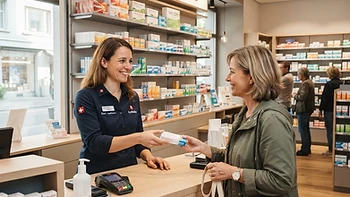
Client Mystère Pharmacie Suisse : Audit de Conformité et d'Excellence Santé
Le secteur de la Santé et de la Pharmacie est unique : la qualité du service y est directement liée au bien-être et à la sécurité du patient. Évaluez l'ensemble du parcours, de la prise de rendez-vous au suivi post-consultation.
Read article