Mystery shopping and compliance: how to ensure your brand standards are met?
Mystery shopping is currently one of the most effective tools for auditing your brand's compliance. Discover how to measure the actual application of your standards, identify hidden gaps, and strengthen the overall consistency of your brand across all channels.
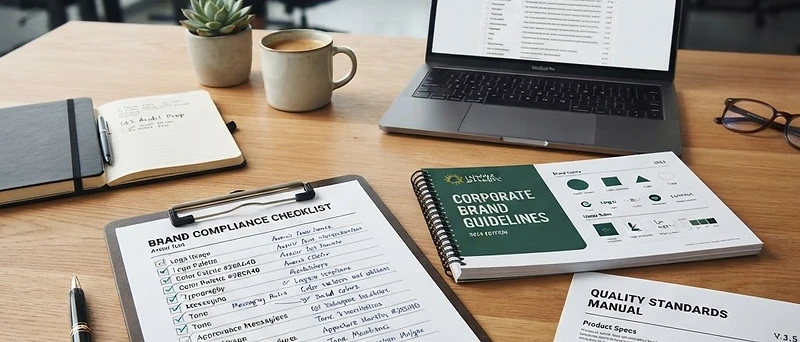
Is your brand applied consistently in the field?
You have invested thousands of euros in your visual identity, communication tone, sales processes, and your ideal customer experience.
But what is actually happening on the ground?
- Do all your touchpoints—physical or digital—respect your brand standards?
- Are your procedures applied consistently from one store to another? From one salesperson to another? From one channel to another?
Mystery shopping is currently one of the most effective tools for auditing your brand's compliance.
In this article, you will discover how to:
- Measure the actual application of your standards
- Identify hidden gaps
- Strengthen the overall consistency of your brand across all channels
Why compliance with standards is strategic
Your brand is not what you say it is. It is what your customers actually experience.
If your tone is warm on the website but cold in-store, the perceived image crumbles.
If your processes are perfectly defined but never applied, you lose:
- Trust
- Consistency
- And often… the customer
Therefore, a strong brand relies on:
- Clear standards
- Consistent execution
- The ability to detect gaps through regular evaluation, in order to correct them quickly
This is where mystery shopping comes into play.

The limits of traditional internal control
Of course, you have:
- Internal processes
- Quality audits
- Management reporting
But these methods have several limitations:
- They are often announced in advance
- Employees can adapt their behavior
- They do not cover the entire customer experience
- They sometimes overlook the emotional or relational impact
Result: you are measuring what your teams think they are doing, not what your customers are actually living.
Many important details can escape these internal controls, particularly those related to the staff's attitude toward customers.
Mystery shopping as a compliance audit under real-world conditions
The mystery shopper behaves like a real customer.
They experience the journey from start to finish, without filters, and provide an accurate evaluation that highlights the strengths and weaknesses of the staff, including their performance level in the field:
- Adherence to procedures
- Application of sales scripts
- Use of expected visual or verbal elements
- Attitude aligned with the brand promise
- Consistency between channels (physical, digital, call center, etc.)
This makes it a much more powerful control tool than a traditional internal audit.
And above all, it allows you to go beyond the technical aspects to audit the embodiment of the brand in the field.
What you can (and should) measure with a mystery customer
Service standards
- Prompt greeting upon arrival?
- Introduction by name and a smile?
- Adherence to the sales sequence?
Visual consistency and brand experience
- Uniforms, atmosphere, signage, merchandising
- Compliance of messages on screens or shop windows
- Identity respected across all platforms
Scripts and key messages
The mystery shopper also evaluates product knowledge and the quality of training received by employees.
They specifically check:
- Are the mandatory phrases spoken?
- Is the tone consistent with the brand image?
- Are the words to be avoided actually being avoided?
Omnichannel journey
- Consistency between website, phone, email, social media
- Identical experience from one channel to another
- Compliance with response times and service levels
The mystery customer acts here as the living guarantor of your brandbook.
How to structure a compliance-oriented mystery shopping program
Step 1: Translate your standards into observable criteria
Transform your values and commitments into measurable items:
"Greeting within 30 seconds" – "Use of the customer's first name" – "Handing over a flyer after every sale"
It is essential to identify each criterion with precision, integrating not only measurable elements but also human aspects such as staff posture in customer situations.
Step 2: Create tailored scenarios
Examples:
- "First purchase by a senior customer in a regional store"
- "Complaint by a B2B customer via email"
Step 3: Choose a representative panel of mystery shoppers
Diversity in terms of age, profiles, regions, and channels.
Step 4: Collaborate with a specialized agency
To ensure:
- Objectivity
- Data reliability
- Clear and actionable reporting
Step 5: Analyze, correct, follow up
A good audit is only useful if it triggers concrete actions.
Real-world cases: 3 companies that regained control of their brand
National franchise: consistency restored across 120 points of sale
- Problem: 40% of stores were not displaying promotional visuals correctly
- Action: mystery shopping campaign, visual checklist + photo
- Result: within 3 weeks, 92% compliance, +8% sales increase on the current promotion
Banking call center: scripts applied only 58% of the time
- Problem: lack of consistency in sales discourse
- Action: anonymous phone audit + targeted retraining
- Result: script application rate rose to 91%, increase in customer satisfaction
Textile retail: atmosphere perceived as inconsistent with the brand
- Problem: some stores deemed cold, not aligned with the lifestyle DNA
- Action: mystery customer audit on felt emotion
- Result: update of greeting guidelines, playlists, and scripts → NPS: +15 pts
The winning approach: specialized agencies + AI + field culture
Specialized agencies = observation expertise
They know how to translate your expectations into auditable criteria, create relevant scenarios, and provide you with reports that drive action.
AI and digital = automation and scalability
Voice analysis, behavioral tracking, NLP, automated scoring...
Internal culture = real transformation
The best campaigns include:
- A clear managerial brief
- Educational feedback
- Concrete improvement loops
This triptych (human + tech + culture) is the key to ensuring your brand compliance in the long term.
Conclusion: managing execution to protect your brand
Compliance-oriented mystery shopping does not just measure: it protects your brand by ensuring that what your customers experience corresponds to what you promised. By translating your standards into observable criteria, collaborating with a specialized agency, and combining AI with a culture on the ground, you turn your audits into sustainable performance levers.
FAQ
Further reading
Mystery visit
The mystery visit is the benchmark evaluation of service quality at the point of sale. A trained mystery shopper poses as an ordinary customer…
Read articleOur sector expertise : Retail
Retail relies on a smooth and engaging in-store experience. Our mystery evaluations measure welcome, advice, presentation and the sales…
Read articleMystery shopping at Swiss Audit Shop
Our approach to mystery shopping and customer experience measurement.
swissauditshop.comWant to evaluate your customer experience?
Let's discuss your goals and build a program tailored to your business.
Request a quoteRelated articles


Client Mystère Pharmacie Suisse : Audit de Conformité et d'Excellence Santé
Le secteur de la Santé et de la Pharmacie est unique : la qualité du service y est directement liée au bien-être et à la sécurité du patient. Évaluez l'ensemble du parcours, de la prise de rendez-vous au suivi post-consultation.
Read article

Client Mystère Banque & Assurance : Auditer l'Expertise Conseil et la Conformité Réglementaire en Suisse
Le paysage des services financiers en Suisse est défini par une exigence de confiance absolue et une complexité réglementaire croissante. L'interaction humaine reste le point de contact décisif pour la souscription de produits complexes.
Read article