Mystery shopping in hospitality, catering, and retail: sector-specific challenges and characteristics
Mystery shopping is not a universal method. Hospitality, catering, retail: the touchpoints are different, as are the satisfaction criteria and the emotions involved. A well-calibrated assignment helps reveal the true friction points.
One tool, three very different realities
Mystery shopping, also known as mystery visits, is not a universal method applied in the same way everywhere. Its impact varies by sector, but also by the intended objectives.
Even though mystery shopping relies on a single tool, there is a wide diversity of sectoral applications.
A question often arises from our clients: "What are the key points to evaluate in a clothing store compared to a restaurant?"
This seemingly simple question highlights an essential finding: each sector has its own codes, challenges, and client expectations.
Hospitality, catering, retail: the touchpoints are not the same, nor are the satisfaction criteria or the emotions involved.
A mystery survey poorly adapted to a context can miss the essentials. Conversely, a well-calibrated assignment helps reveal true friction points and deeply improve the customer experience.
In this article, we will explore:
- What distinguishes each sector
- How to adapt your client audits
- Best practices for maximum ROI
Why mystery shopping remains essential in 2025
Even in a world of data, QR codes, and AI, human field assessment remains irreplaceable.
Mystery shopping:
- Objectifies the reality perceived by the client
- Identifies the gaps between the brand promise and the actual experience
- Complements quantitative KPIs with qualitative insights
82% of leading CX companies now use hybrid mystery missions (field + digital).
Hospitality: the importance of welcome and service consistency
Specificities:
- The client expects a seamless experience from check-in to check-out
- Every interaction (reception, room service, concierge) is a moment of truth
- Expectations vary by category (3 stars ≠ luxury hotel)
To evaluate:
- Waiting time upon arrival
- Warmth and personalization of the welcome
- Responsiveness via phone or internal apps
- Cleanliness, discretion, comfort
- Incident management (cleaning delay, complaint…)
A mystery client can spend a full night in the establishment and even test additional services (spa, restaurant, room service).
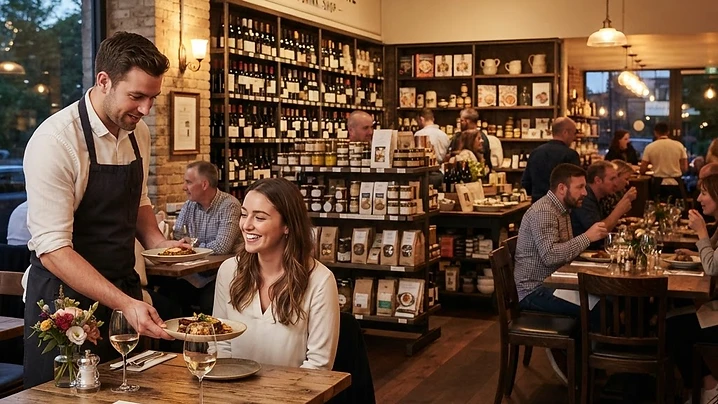
Catering: speed, perceived quality, and atmosphere under the microscope
Specificities:
- The impression is immediate (on the plate, the service, the environment)
- Timeframes play a crucial role: ordering time, service time, payment time
- Atmosphere and hygiene strongly influence loyalty
To evaluate:
- Welcome (tone, posture, smile)
- Timeframes (ordering, service)
- Plate presentation / perceived quality
- Cleanliness (tables, restrooms, dining room)
- Ability to handle a complaint or a rush
Useful scenarios:
- Arriving without a reservation during peak hours
- Ordering a dish with a modification
- Testing an allergen or specific request
Retail: an omnichannel customer journey to be evaluated precisely
Specificities:
- The client often goes through several channels: web → phone → store
- The role of the salesperson is fundamental to trigger the sale
- Merchandising and in-store orientation play an invisible but crucial role
To evaluate:
- Welcome in the department
- Salesperson's product knowledge
- Ability to accompany a hesitation or suggest a complementary sale
- Return or exchange management
- Consistency between online info and actual availability
The quality of customer service, both online and in-store, is a fundamental pillar of retail.
The evaluation must be omnichannel: website, chat, phone, delivery…
Methodology adapted by sector
Mystery clients are trained to observe details specific to each field. Each sector requires an adapted approach in line with its business challenges. This immersive method provides feedback that is both factual and emotional.
| Sector | Mission Duration | Recommended Format | Key elements to observe | | --- | --- | --- | --- | | Hospitality | 12h to 48h | Immersive mystery client | Welcome, cleanliness, client follow-up | | Catering | 1h to 2h | Simple field visit | Waiting time, service, quality | | Retail | 30 min to 2h | Multi-channel scenario | Welcome, advice, fluidity |
Examples of successful sector-specific missions
A comparative study of the results before and after the evaluation made it possible to measure the impact of the adjustments. The challenge is to maintain high standards throughout the customer journey.
Hospitality — 4-star group in the Alpine region
- Objective: increase post-stay satisfaction rate
- Result: +19% NPS after revising the check-out process and night staff training
Catering — Premium burger chain
-
Objective: identify causes of mid-meal abandonment
-
Result: implementation of a "visible manager" in the dining room for every service → 35% decrease in complaints
Retail — Appliance retailer
- Objective: test cross-channel consistency
- Result: overhaul of the web booking system → +21% conversion in-store
Avoid frequent sector-specific errors
Without prior analysis, you risk missing the true levers for improvement.
- ❌ Applying the same grid to all activities → ✅ Customize criteria by establishment type
- ❌ Forgetting critical hours (lunch rush, night, Saturday…) → ✅ Schedule missions during peak traffic times
- ❌ Neglecting soft skills (attitude, smile, body language) → ✅ Integrate qualitative observations into reports
Conclusion: sector expertise at the heart of high-performance mystery shopping
Mystery shopping is not a universal method: each sector — hospitality, catering, retail — has its own codes, challenges, and client expectations. A well-calibrated mission, adapted to the sector context, allows for revealing true friction points and deeply improving the customer experience. By personalizing criteria, planning missions during peak times, and integrating soft skills, you transform your audits into sustainable performance levers.
FAQ
Further reading
Want to evaluate your customer experience?
Let's discuss your goals and build a program tailored to your business.
Request a quoteRelated articles

Audit Qualité de Service Transports Publics et Aviation : Évaluer l'Expérience Voyageur de Bout en Bout
Les Transports Publics et l'Aviation sont au cœur de l'activité économique et sociale de la Suisse. Évaluez l'expérience voyageur de bout en bout, de l'achat du billet à la sortie de la gare ou de l'aéroport.
Read article
Client Mystère Pharmacie Suisse : Audit de Conformité et d'Excellence Santé
Le secteur de la Santé et de la Pharmacie est unique : la qualité du service y est directement liée au bien-être et à la sécurité du patient. Évaluez l'ensemble du parcours, de la prise de rendez-vous au suivi post-consultation.
Read article