Omnichannel mystery shopping: why you must evaluate all your customer touchpoints
For the customer, there is only one experience with your company. If one of your touchpoints does not reflect your brand promise, your entire image suffers. In 2025, omnichannel mystery shopping is an essential strategic tool.
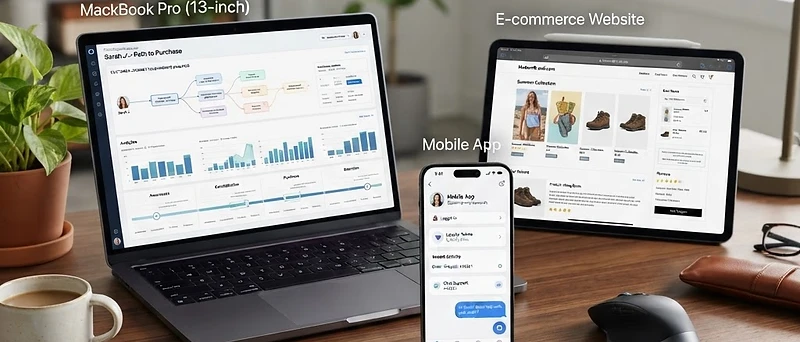
Your customers don't see your services, they live an experience
You have a shop or a store. A website. Customer service by phone. An Instagram account, a newsletter, a contact form...
But for the customer, there is only one experience with your company, which truly takes place where they interact with your brand.
And if one of these touchpoints does not reflect your brand promise, then your entire image, your products, and your information suffer.
That is why, in 2025, omnichannel mystery shopping is an essential strategic tool for your marketing and commerce.
It is no longer just about testing a salesperson or a website, but about measuring the consistency, quality, and effectiveness of every customer interaction.
In this article, discover why and how to evaluate all your customer touchpoints with an omnichannel mystery shopping program, and turn your findings into concrete actions for sustainable improvement in customer satisfaction, sales performance, and brand image.
The omnichannel customer is the norm, not the exception
The omnichannel customer journey in 2025 rarely resembles a straight line.
A prospect discovers an offer on Instagram, reads a Google review, asks a question via chatbot, enters a store... and finalizes their purchase via the mobile site.
80% of customer journeys are now multichannel, according to Salesforce. And 70% of consumers expect a consistent experience across all interaction channels.
In other words: your customers do not distinguish your services by silo. They judge the whole thing as one single experience, regardless of the products, services, or touchpoints. This is where precise knowledge of their expectations comes into play to optimize your marketing and sales practices.
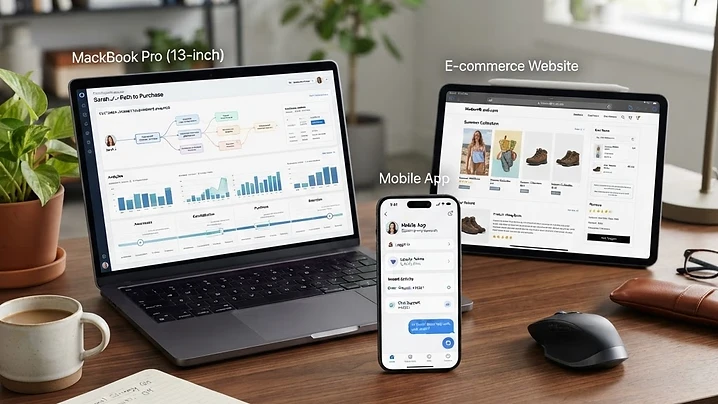
The risks of a fragmented customer experience
A chain can be strong... but if one link breaks, the entire omnichannel experience collapses.
Frequent examples:
- Impeccable e-commerce site, but disorganized telephone customer service
- Welcoming store, but aggressive or poorly trained chatbot
- Polished social media, but cold or robotic email responses
Result:
- Loss of trust
- Inconsistent image
- Weak recommendation
- Drop in conversion or retention rate
This does not meet the expectations of a modern, demanding, connected customer accustomed to moving from one channel to another seamlessly.
This weakens the customer relationship because consumers no longer know what to expect from one touchpoint to another.
Omnichannel mystery shopping allows you to see what you don't see... and correct it before it's too late.
Omnichannel mystery shopping: definition and principles
Omnichannel mystery shopping consists of testing all your customer relationship channels in a coordinated and realistic manner, using concrete scenarios.
It allows you to:
- Verify the consistency of messages, attitudes, and processes
- Evaluate response times, reactivity, and personalization
- Measure the effectiveness of communication across all platforms
- Identify the tools, advice, and information actually transmitted
- And above all: reproduce real customer journeys, not theoretical ones
Example: "A customer discovers an offer on Instagram, contacts customer service by email, visits the store, then confirms the purchase by phone."
This type of audit highlights the concrete issues related to the perception of your brand and provides multiple opportunities for a better understanding of the clientele.
The 4 major channels that must be audited
1. The physical point of sale
- Quality of welcome
- Compliance with procedures
- Clarity of the offer
- Conformity to brand image
2. The telephone channel
- Response time
- Tone and quality of listening
- Level of resolution
- Call follow-up
3. Digital (website, e-commerce, app)
- Navigation, UX
- Quality of content
- Technical reliability
- Conversion funnel
4. Written channels: email, social media, chatbot
- Response times
- Relevance of messages
- Consistency with brand tone
- Clarity, personalization, humanity
It is often the written channels that break the experience without anyone noticing.
How to structure an omnichannel mystery shopping campaign
A cross-analysis of results by channel and by stage of the journey makes it possible to identify breaks in consistency.
Step 1: Map all your active channels
List:
- What you control (site, store, hotline)
- What is public (reviews, social media, messages)
Step 2: Create realistic journey scenarios
Examples:
- Hesitant customer → Instagram info → call → visit → purchase
- Pro customer → request quote by email → follow-up → order
Step 3: Define homogeneous evaluation criteria
Examples: welcome, response time, tone used, effectiveness, clarity, consistency...
Step 4: Recruit the right mystery shoppers
Multichannel, multilingual, multi-profile.
Step 5: Compile, analyze, and report for action
A good audit provides:
- Evidence (audio, video, captures)
- Scoring by channel
- Concrete recommendations
Client cases: 3 omnichannel audits that changed the game
International Retail — consistency restored
- Problem: high-end website, very basic call center
- Action: comprehensive 7-channel audit → overhaul of telephone discourse
- Result: +23% customer satisfaction and +14 pts on recommendation
Banking Group — lost opportunities due to emails
- Problem: loan requests managed well in branch, followed up poorly via email
- Action: mystery shopper audit + email re-scripting + AI automation
- Result: +19% digital conversions
B2C Start-up — consistency between networks and application
- Problem: dynamic communication on Instagram, but cold app
- Action: emotional omnichannel audit + visual and textual alignment
- Result: +28% user retention at 30 days
Why the human + AI hybrid approach is essential
A chatbot can respond faster. But only a human can say whether the message makes you want to stay.
This is why the most powerful audits are:
- Conducted by trained mystery shoppers
- Supported by behavioral data from AI (tracking, NLP, sentiment analysis)
This hybrid approach allows for:
- Precise insights
- Emotional elements
- Concrete action plans
And above all: it reveals areas of inconsistency invisible to your internal teams.
AI does not replace humans but allows for better targeting of gaps and the automation of corrective actions.
Conclusion: test everything to master the experience
Omnichannel mystery shopping is not a luxury: it is a necessity for any company that wishes to offer a consistent and high-performing customer experience. By evaluating all your touchpoints in a coordinated way, you identify invisible breaks, align your teams, and strengthen your customers' trust. Testing everything means mastering the experience.
FAQ
Further reading
Want to evaluate your customer experience?
Let's discuss your goals and build a program tailored to your business.
Request a quoteRelated articles


Audit Qualité de Service Transports Publics et Aviation : Évaluer l'Expérience Voyageur de Bout en Bout
Les Transports Publics et l'Aviation sont au cœur de l'activité économique et sociale de la Suisse. Évaluez l'expérience voyageur de bout en bout, de l'achat du billet à la sortie de la gare ou de l'aéroport.
Read article
Client Mystère Pharmacie Suisse : Audit de Conformité et d'Excellence Santé
Le secteur de la Santé et de la Pharmacie est unique : la qualité du service y est directement liée au bien-être et à la sécurité du patient. Évaluez l'ensemble du parcours, de la prise de rendez-vous au suivi post-consultation.
Read article